Showing posts with label 1001 Steps. Show all posts

Wednesday, January 11, 2012

A MUSICAL EDUCATION IN 1001 STEPS - PT 29

Muddy Waters - Muddy Waters at Newport 1960 (1960)

It's Muddy Waters. If you like Muddy Waters, you'll like this album. If not, then you won't. I kind of liked it, but when you listen to a bunch of Muddy Waters songs in sequence, you sort of get wise to the methodology and it loses some of its shine. Most of his lyrics consist of the song titles repeated over and over while a 3 chord blues vamp chugs along behind him in the mix. Including all the intro/outro and Newport festival stage announcement ephemera gives you that "I was there" feeling, but, again, if you don't already "get" this kind of music by now, this album probably won't convert you - even though it converted many, many people, way back in its day..

I heard it before? Most of it.
Do I like it? Yes. But I don't love it.
Am I keeping it? Only the standout tracks.
Standout Tracks? "I Got My Brand on You", "Got my Mojo Workin", "Baby Please Don't Go"

Monday, August 29, 2011

A MUSICAL EDUCATION IN 1001 STEPS - PT 28

The Incredible Jimmy Smith - Back at the Chicken Shack (1960)

I'd never heard of this cat before, but I was immediately intrigued by both the braggadocious album title and the humorous cover photo. Whoever this "incredible" Jimmy Smith gentleman might be, he definitely grabbed my attention from the get-go. The music behind the image was absolutely not what I expected. The central focus of this all-instrumental album is the legendary roller-rink sound of Mister Hammond's Organ. The Book says this is the first ever album of "soul jazz" and I guess that moniker kind of fits, but more than anything this reminds me of a kind of embryonic version of Booker T and the MG's, with a hint of the type of music that would explode out of Jamaica a few years later with the likes of Jackie Mittoo and The Upsetters. Fans of these Kingston superstars should find this album very enjoyable, as I did.

Had I heard this before? No.
Do I like it? Yes.
Am I keeping it? Yes.
Standout tracks? "Minor Chant", "When I Grow Too Old To Dream"


A MUSICAL EDUCATION IN 1001 STEPS - PT 27

The Everly Brothers - A Date with the Everly Brothers (1960)

I don't know what to say about this record other than the fact that I didn't enjoy it. Perhaps the inability to enjoy this kind of harmless fluff is a failure all my own. If so, so be it. The lyrics are the typically insipid treacle characteristic of the era - neither more nor less offensive than all the other teenage broken heart at the malt shop crap that was being churned out by countless artists and labels back in the Good Old Days of Eisenhower's America. Even the album cover gets on my nerves. They look like they're calling a Black family to warn them not to move into their neighborhood or something. Blech!

Had I heard it before? Yes.
Do I like it? Meh.
Am I keeping it? No.
Standout Tracks? "Cathy's Clown" is, at the very least, memorable.

Thursday, August 25, 2011

A MUSICAL EDUCATION IN 1001 STEPS - PT 26

Miriam Makeba - Miriam Makeba (1960)

Wow. 

Aside from being able to write amusingly snarky comments about artists I don't like, finding wonderful stuff like this is probably what makes this 1001-step exercise in music appreciation so rewarding. Miriam Makeba was a South African Xhosa singer who was brought to the States by Harry Belafonte, who "discovered" her during one of his many trips to Africa. After listening to her first American album (which Belafonte produced), I can see why he was so smitten.

One impressive aspect of Makeba's voice is that it sounds as comfortable and natural belting out standards like "House of the Rising Sun" as it does clicking and popping through the astonishing "Click Song". And her take on the classic South African pop hit "Mbube" - also known as "Wimaweh", also known as "The Lion Sleeps Tonight" - is so jubilant, so vital and throbbing with life, it leaves me struggling for the proper words to describe it. 

As good as the music is, in this case, there is an even more incredible personal story behind that music. Makeba, who died in 2008 after a concert in Italy, was known as "Mama Africa" and "The Voice of Africa" for her tireless work against the Apartheid regime, which led to her 30-year exile from the homeland she so dearly loved. Oh, and did I mention she was incredibly beautiful? Thankfully for those of us too lazy to do all the research ourselves, there's a movie coming out about her life.

So far, 26 albums deep, this is my favorite new discovery, and it's going to take something pretty impressive to dislodge it from its perch.

I heard it before? No.
Do I like it? Yes. It's wonderful.
Am I keeping it? Yes.
Standout Tracks? "Mbube", "The Retreat Song", "The Click Song", "The Naughty Little Flea", "Nomeva"


Wednesday, August 24, 2011

A MUSICAL EDUCATION IN 1001 STEPS - PART 25

Elvis Presley – Elvis is Back! (1960)

Elvis' first album after spending two years in the military doesn't waste any time covering a lot of new ground. The King strays far from his rocky roots, indulging his creative side with everything from torch balladry ("Fever") to opera ("It's Now Or Never") to super-smooth romantic crooning ("Are You Lonesome Tonight") with a barn-storming nut-rocker thrown in for good measure ("Such a Night"). The end result was a hit-packed, persona-redefining album that was Elvis' favorite of his own work. I hadn't heard many of these songs in a long while, and it was very enjoyable to revisit them. Thanks, Elvis!

Had I heard it before? Yes.
Did I like it then? Yes.
Do I like it now? Yes.
Am I keeping it? Yes.
Standout Tracks? "Are You Lonesome Tonight", "Love Me Tender", "It's Now Or Never", "Such a Night"


A MUSICAL EDUCATION IN 1001 STEPS - PT 24

Joan Baez - Joan Baez (1960)

Only 23 albums and we're already switching decades! That means the 50's only got... let's see... 23 out of 1001... carry the three... 2.39 percent of the slots available! Oh well. Time marches on, and so must we, if we're expecting to finish this exercise. That means no quibbling over minor details like the one I just spent five minutes quibbling over.

Now, on to Joan Baez. I recently mentioned how Joan, Willie Nelson, Jim Croce and Ray Charles were erstwhile companions on a couple of family cross-country driving trips, thanks to their "Best Of" tapes being the only listening material in the car other than the radio. So I do harbor a certain fondness for her peculiar, warbling, high-pitched vocal stylings, occasionally in spite of my own better judgement. Of course, at the time I had no idea about her relationship with Bob Dylan (which spawned one of the most bitter breakup songs ever in "Diamonds and Rust") or the fact that she borrowed her falsetto/vibrato/rubato technique wholesale from Cambridge folkie Debbie Green. But that hardly seems to matter at this point, especially considering many of these songs were centuries old by the time they were recorded.

Fifty years later, is this material still worth a listen? I would say yes. It's definitely not as vital or immanent as it used to be - its time, politically speaking, having come, gone and left a whole lotta ugly t-shirts (not to mention busted bongs and a scattering of syringes). But there is artistry worth considering, here, and some of the selections are deeply moving. Give it a listen and see for yourself.

Had I heard it before? Most of it.
Did I like it then? Yes.
Do I like it now? Slightly less so.
Am I keeping it? Only the Standout Tracks.
Standout Tracks? "Silver Dagger", "All My Trials", "Wildwood Flower", "John Riley", "Girl of Constant Sorrow" (yes, the O! Brother Where Art Thou? song)

Tuesday, August 23, 2011

A MUSICAL EDUCATION IN 1001 STEPS - PT 23

Dave Brubeck Quartet - Time Out (1959)

Are my ears deceiving me, or am I discerning substantial chunks of what some wags might refer to as "progressive rock" in these idiosyncratic and memorably quirky compositions? The bouncy hit "Take Five" had become the instrumental sensation of the season, or perhaps, it could be argued, of the decade. And there's definitely no debating that particular tune's pedigree. It is jazz, straight up, no chaser. But on many of the other selections here, Brubeck's Quartet crank out music that wouldn't seem out of place on a Gentle Giant album.The opening track, "Blue Rondo", careens from Stravinsky-esque staccato piano-banging to finger-snapping bebop alto horn solos - then back again - with an almost diabolical abandon. The next cut, "Strange", kicks things off with a warm and lovely Liberace style étude before dropping into a smooth and mellow swing set. That's followed by "Take Five", which you've heard even if you think you haven't. After that it's a mixed bag, with some tunes in the Duke Ellington mode and others that you might be able to squeeze onto Frank Zappa's Hot Rats without anyone but bona-fide Zappaphiles taking note. Very interesting, and a definite recommend.

Had I heard it before? Only "Take Five".
Do I like it? Yes.
Am I keeping it? Yes.
Standout Tracks? "Blue Rondo", "Strange", "Take Five", "Pick Up"

A MUSICAL EDUCATION IN 1001 STEPS - PT 22

Marty Robbins - Gunfighter Ballads and Trail Songs (1959)

Many of the songs on this album could easily have played over the opening credits of The Big Lebowski instead of the one the Coens eventually went with: Tumbling Tumbleweeds. Marty Robbins' cowboy songs have that same half-authentic, half-artificial feel to them. His voice seems far too delicate, even pretty, for the gritty subject matter. I somehow doubt the men who worked and ranged over the land back in olden days spent much time indulging their passion for barbershop harmonizing. And yet that's part of what makes this selection of songs so compelling. I think smart people call it "tension". 

I'll tell you this: If I were trying to write the script for an ironic Western, many songs from this album would definitely be in heavy rotation in my "tunes to write by" mix. Robbins paints a picture, and even if sometimes it's a goofy, kitschy picture, it's always painted quite well, with all the little details in place. The spurs and revolvers shine. The oiled leather saddles glow warm and golden. You can almost see Lee Van Cleef crouching behind a papier-mâché boulder, drawing a bead on you. And there's the stage-hand, just beyond the Saloon facade, tossing a tumbleweed in your direction just as the 2nd AC chops the air with his black-and-white clapperboard. 

It's just a bit of harmless fun, and I didn't hate it, like I thought I would. So sue me!

Had I heard it before? Chunks of "Cool Water" and "El Paso" have been permanently engraved into the side of my brain since early childhood, thanks to those K-Tel commercials way back when.
Do I like it? More than I thought I would.
Am I keeping it? Yes.
Standout Tracks? "Cool Water", "Big Iron", "El Paso", "Come Back to the Valley"


Monday, August 22, 2011

A MUSICAL EDUCATION IN 1001 STEPS - PT 21

Miles Davis - Kind of Blue (1959)

So many gallons of ink have been spilled in praise of Miles Davis' masterpiece, Kind of Blue, that anything I add here will invariably end up seeming redundant, repetitive and totally unnecessary. Suffice it to say that the hundreds of critics and scholars who call this "The Best Jazz Album Ever" aren't exaggerating in the slightest. Eschewing Bebop and taking one of the most incredible bands ever assembled (Bill Evans, Wynton Kelly, Jimmy Cobb, Paul Chambers, Cannonball Adderley, John Coltrane) into the studio to explore the wide open spaces of modality, Miles came out on the other side with an album that quite simply demands - and amply rewards - every thinking music lover's full and undivided attention. It would take someone far more knowledgeable about the mechanics of music theory to explain how this works to any accurate degree, but roughly it means that, instead of being given a composed score, a series of chord progressions or a harmonic framework, each musician was given a set of modal scales defining their improvisational parameters. The end result was something Davis called "Modal Sketches", but you might as well just call it magic. Look, just trust me on this one, okay? Seek out Kind of Blue at your earliest possible convenience, in any format you can get your hot little hands on, set aside an hour, maybe roll yourself a spliff, smoke it slow and just... dig... the groove.

Had I heard it befoer? Yes.
Did I like it then? Yes.
Do I like it now? Immensely.
Am I keeping it? Yes.
Standout Tracks? Every cut is a Standout Track.


A MUSICAL EDUCATION IN 1001 STEPS - PT 20

Ray Charles - The Genius of Ray Charles (1959)

Wit this, his third album, the man who single-handedly created Soul by blending R&B, Blues, Jazz and Gospel tried his hand at something akin to "Big Band Fusion", backed up by Basie and Ellington alumni with lush arrangements by Quincy Jones. It works, of course, as pretty much everything Ray Charles ever attempted always seemed to. Side One is pure bombast, a high energy romp through some old favorites from the Great American Songbook, to most electrifying effect in "Let the Good Times Roll" and "Alexander's Ragtime Band". But it's Side Two that stands out, here. Jones elevates Charles' distinctive, beautiful croon to the top of the mix, so you can hear every tortured sigh of his incredibly expressive delivery. Here is the Ray Charles who would go on to become a national treasure in his lifetime, with good reason.

Had I heard it before? About half the songs.
Did I like it then? I have always loved Ray Charles, and he is forever locked with Willie Nelson, Jim Croce and Joan Baez in my mind, because of a few cross-country trips where the only cassette tapes we had in the car were those four Best Of collections. 
Do I like it now? Yes.
Will I be keeping it? Yes.
Standout Tracks? "Let the Good Times Roll", "Alexander's Ragtime Band", all of Side Two

A MUSICAL EDUCATION IN 1001 STEPS - PT 19

Ella Fitzgerald Sings the George and Ira Gershwin Songbook (1958)

With this, the 19th stop in our musical journey across the post-war decades, we complete the triumvirate, the Holy Trinity of Female Jazz Vocalists of the 20th Century. First was the brilliant and tragic Billie "Lady Day" Holiday, with her iconoclastic phrasing and her ability to wear a song like a personally fitted, gem-encrusted shroud. Then was Sarah "The Divine One" Vaughan, with the mellow warmth and glowing, perfect tone. And now we come to Ella Fitzgerald, the "First Lady of Song", who brought her personal sense of swing to every song she sang, not just the "scat" vocal improvs for which she was justifiably renowned. 

Ella Fitzgerald Sings the George and Ira Gershwin Songbook is, by reputation, the best in a legendary series of album sets in which Ella interprets the so-called "Great American Songbook". So you have a Black woman interpreting songs written by mostly Jewish writers, targeted specifically at a White, Christian audience/market. In a way, in terms of her impact on the cultural side of race relations, Ella was kind of like Elvis before Elvis! 

Maybe I'm just not in the mood right now, but I wish I was enjoying the experience of listening to this box set more than I am. It's a long slog - fifty-three songs, many of which are sad and slow - and it obviously wasn't designed to be digested in a single sitting. On certain songs - "Nice Work if You Can Get It", for instance - Ella lets herself swing. But for the most part, she shows a kind of reverence for the material that perhaps it doesn't really deserve - or, more importantly in this case, require. The whole affair would have benefited from a bit more of a fun, loosey-goosey, anything-goes approach... in my humble opinion, at least. 

Don't get me wrong, here. Ella does each song perfect justice - as does the ubiquitous Nelson Riddle, whose arrangements are, as usual, perfect. I'm just saying maybe it's a little too much justice. If you're looking for a definitive collection of Gershwin interpretations, you won't find better. If you're looking for the best of what Ella can deliver, you're probably better off looking elsewhere.

Had I heard it before? Not all collected like this, no.
Do I like it?  I respect it a lot more than I like it.
Am I keeping it? Only the Standout Tracks.
Standout Tracks? "Nice Work if You Can Get it", "S'Wonderful", "Strike Up The Band", "Slap That Bass", "Embraceable You"


Saturday, August 20, 2011

A MUSICAL EDUCATION IN 1001 STEPS - PT 18

Sarah Vaughan and her Trio - Live at Kelly's (1958)

Along with her frequent collaborator Billy Eckstine, Sarah Vaughan was one of the first artists to bring bop and swing into the popular consciousness in the 1940's. Their Big Band spawned such talents as Dizzy Gillespie, Charlie Parker, Miles Davis and Art Blakey, to name but a few. So if you've ever enjoyed any of these people's music, you now know who to thank. Now, if that list of Jazz Giants seems intimidating, make no mistake about it; Vaughan's command of her instrument was no less sure and true than Miles' over his horn, or Blakey's over his drumsticks. Her voice is warm and rich and her control is unbelievable, even - or perhaps especially - when she forgets the lyrics and begins scatting and giving affectionate shout-outs to Ella Fitzgerald on "How High the Moon", an album highlight. As I sit here listening to "Dream", I can understand why one of Sarah's many nicknames was "The Divine One" (another one was "Sailor" because of her love of swearing). Hers is a voice so fantastic it's almost enough to make a confirmed atheist consider the possibility of the existence of the Almighty. Also, the between-song patter on this extremely intimate recording is priceless, giving you a real sense of the obviously immense personal magnetism that made Vaughan such a long-lived favorite among aficionados of Great American Music.

Had I heard it before? Only a few of the songs.
Do I like it?  Oh, yes.
Am I keeping it? Yep.
If I had to seek out only one song by this artist, what should it be? "Whatever Lola Wants", most definitely.
Standout Tracks? "How High the Moon", "Thou Swell", "It's Got to be Love", "Honeysuckle Rose", "Embraceable You", "Dancing in the Dark", "I Cover the Waterfront"


Ah, what the heck. Here's a video featuring stills of Vaughan while she sings her signature song, "Whatever Lola Wants":

Friday, August 19, 2011

A MUSICAL EDUCATION IN 1001 STEPS - PT 17

Jack Elliott - Jack Takes the Floor (1958)

I feel I should confess up front that I do not now, nor have I ever, enjoyed Folk music. I don't mean real, traditional folk music, like Negro chain-gang spirituals or "Greensleeves". I refer, in this case, to the music of what musicologists refer to as the "Second Folk Revival", which is also known as the "Folk Explosion", commonly associated with artists like Peter, Paul and Mary, The Mamas and the Papas, Simon and Garfunkle and Joan Baez.

It is certainly true that many of these artists produced influential work of lasting popularity, and I don't mean to tar all of them with the same brush. However, much of the music from that era gives me the willies. Maybe it's the harmonies, or the recording techniques that were used. There's a hollow, cult-like quality to much of it that gives me the same kind of Manson Family creepy-crawly feeling that I get when I watch the Hippie Commune scene from Easy Rider.

If you've seen the movie you'll remember the scene. A bunch of sunburned Jesus Christ lookalikes with vacant stares pray over a simple supper of gruel smooshed together from the meager selection of crops they've managed to tease from the barren patch of scrubland where, in their shirtless Hippie wisdom, they have decided to "make a go of it". As Dennis Hopper and Peter Fonda prepare to depart, Hopper expresses his doubts about the operation. In response, Fonda says something like: "They'll make it... dig?" What a pompous ass. This one scene alone almost ruins the entire film for me.

Even though I probably share a lot of the political views held by many of these artists, some of their music still sets off alarm bells in my head. Perhaps it is because I have taken the time to educate myself about what was going on behind the scenes of that "scene" that I'm over-sensitive to certain nuances pertaining to it. Perhaps not. It nevertheless remains an indisputable fact that much of the "product" surreptitiously unleashed by certain Sinister Forces back in that most misunderstood of sociopolitical eras was responsible for sucking in, chewing up and spitting out more than a few good-hearted, soft-headed people, dragging them through the Chapel Perilous against their wills, causing many to drown there and be forever lost in the lava lamp undertow of Acid Fascism.

What does all of this have to do with Ramblin' Jack Elliott or this album in particular? Other than the fact that he was a tremendous influence on most of the artists of the 60's Folk Explosion, not a whole hell of a lot. I guess I just had some ideas that I needed to let out of my head. Thanks for reading.

Oh, and don't forget not to take the Brown Acid, the one-time Holy Host of the CIA.

Had I heard it before? No.
Do I like it? Not really. But it's better than most of what came after.
Am I keeping it? Only two songs.
Standout Tracks? "Muleskinner Blues", which I genuinely like, and "Bed Bug Blues", which I am keeping because there is currently a continent-wide Bed Bug panic, and this song might come in handy for some future media work.


Thursday, August 18, 2011

A MUSICAL EDUCATION IN 1001 STEPS - PT 16

Billie Holiday - Lady in Satin (1958)

This was apparently a controversial pick among The Book's editors, as the legendary-in-her-own-lifetime Lady Day was long past her prime when it was recorded. Holiday had been riding a pale horse towards oblivion for two solid decades, with both heroin and hard drink having ripped much of the rich and mellow tone from her voice, so the "satin" in the title of this, her final album, seemed like a reference to coffin linings rather than evening gowns. And yet, as a testament to the resilience of authentic genius - a quality that shines through even the most glaring of handicaps - the album undeniably works. On the more melancholy cuts - and the track list is fittingly rich in downbeat subject matter - you could even argue that the scratchy catch in Holiday's throat works in the material's favor. There's a reason why she was often called "the suicide's favorite." As I sit here listening to this most mournful of swan songs, I am reminded of Rick Rubin's monumental "American" project with Johnny Cash. Are there better Billie Holiday collections than Lady in Satin? Yes. Are any of them as poignant? Definitely not.

Had I heard it before? Yes.
Did I like it then? Somewhat.
Do I like it? Yes. A lot.
Am I keeping it? Yes.
Standout Tracks? Every cut is a masterpiece, but "I'm a Fool to Want You" and "You Don't Know What Love Is" are powerful stand outs.

Tuesday, August 16, 2011

A MUSICAL EDUCATION IN 1001 STEPS - PT 15

Tito Puente - Dance Mania Volume 1 (1957)

Okay, you can pretty much tell from the title that this one isn't exactly gonna be strolling down yer old pal Jerky's alley. This is Big Band Mambo from the undisputed KING of Big Band Mambo, so if the idea of syncopated rhythms gets your hips and feet moving in a spiffy sort of counterpoint shuffle, then this is the disc for you. For non-dancers and individuals not of a certain ethnic background, it's more of a historical curiosity. As for myself, I typically classify this type of music as "research material", because the only reason I'd ever listen to this again is if I were writing something set in an era and/or locale for which this kind of music would be appropriate, just to get myself in the mood. Otherwise, I can't see myself revisiting this one. It does sound pretty though, I have to admit. "Cha-cha-cha!"

Had I heard it before? I don't think so.
Do I like it? Kind of. A little bit. I guess.
Am I keeping it? Only the Standout Tracks.
Standout Tracks? "3D Mambo", "Llego Mijan", "Hong Kong Mambo", "Mambo Gozon"


Monday, August 15, 2011

A MUSICAL EDUCATION IN 1001 STEPS - PT 14

Little Richard - Here's Little Richard (1957)

Would you like to see some high praise? These five words from The Book about Here's Little Richard stopped me cold: "Rock and roll's stem cells." Wow... that's really saying something. And you know what? It's true. I've always kind of dismissed Little Richard as a slightly more masculine iteration of Prince, without the latter's unfortunate penchant for the inscrutable pose. But on these early, original recordings - not the inferior versions recorded later to get around lousy contracts - I swear I can hear snatches of everything from Marvin Gaye to Motorhead. It boggles my frigging mind to think that all these fantastic songs were recorded over half a century ago on a single-track recording unit. How is that possible?!

Had I heard it before? Yes.
Did I like it then? Yes.
Do I like it now? Yes.
If I had to sum it up in a single word? Does "A-wop-bop-a-loo-bop-a-wop-bam-boom" count as one word?
Am I keeping it? Yes.
Standout Tracks? "Tutti Frutti", "Ready Freddy", "Long Tall Sally", "Slippin and Slidin", "Rip it Up"


A MUSICAL EDUCATION IN 1001 STEPS - PT 13

Machito - Kenya (1957)

This intoxicating blend of Afro-Cuban rhythms and Duke Ellington style Big Band Jazz is like the soundtrack to some great, lost epic film about the Batista regime in pre-revolutionary Cuba, back when it was the most bananas of all the many Banana Republics in Uncle Sam's filthy, rancid back pocket. Maybe Francis Ford Coppola could have directed it. Maybe Oliver Stone still can. Anyway, every cut on this album throbs like a Havana nightclub in 1944, with Ernest Hemingway holding court up in a corner balcony - as far away from the band as possible so the lovely 15-year-old brown girl squirming in his lap can hear what he's shouting in her ear - puffing on a Cohiba, slurping down one Mohito after another, back in those steamy days before everything came crashing down and the only way out so far as he could see was by dancing the Shotgun Waltz. Once again, I have to say this is absolutely essential listening for any would-be drummers or percussionists out there.

Had I heard it before? No.
Do I like it? Kind of, but I resist it.
Why? Because it wants me to DANCE, goddamnit!
If I had to sum it up in a single word? "Afrocubalicious!"
Am I keeping it? Only the Standout Tracks.
Standout Tracks? "Kenya", "Wild Jungle", "Frenzy", "Oyeme", "Conversation", "Minor Rama"


Sunday, August 14, 2011

A MUSICAL EDUCATION IN 1001 STEPS - PT 12

Miles Davis - The Birth of Cool (1957)

Everything I wrote about Thelonious Monk's Brilliant Corners two reviews ago stands for Miles' debut as a band-leader, here, as well. Birth of the Cool is both testament and witness to Miles' apprenticeship under Dizzy and Bird. One difference here is song duration. Unlike Monk, Miles was still sticking to the mythical "3 minutes" that songwriters believed was the "perfect" length for a successful piece of music. This perhaps makes Birth of the Cool the better starting point for someone wanting an introduction to modern or "cool" jazz, as Brilliant Corners' never-ending epics take a lot more out of the listener. That's not to say Birth of the Cool is Easy Listening. It requires concentration, as does anything of value. This is the kind of music people used to sit in dark, smokey clubs, put on their Jazz Face (everybody's got one) and think real hard about... but mostly they'd be thinking "Who does that guy facing the back of the room think he is? And who farted?" The answer to both those questions was, is, and always shall be an emphatic: "MILES DAVIS!" 

Had I heard it before? Yes.
Did I like it then? Yessir.
Do I like it now? Oh, yes.
What percentage of people reading this do I think will like it? Roughly 20-25%, which is actually pretty high!
Am I keeping it? Yes.
Standout Tracks? "Move", "Jeru", "Godchild", "Israel", "Darn that Dream"


A MUSICAL EDUCATION IN 1001 STEPS - PT 11

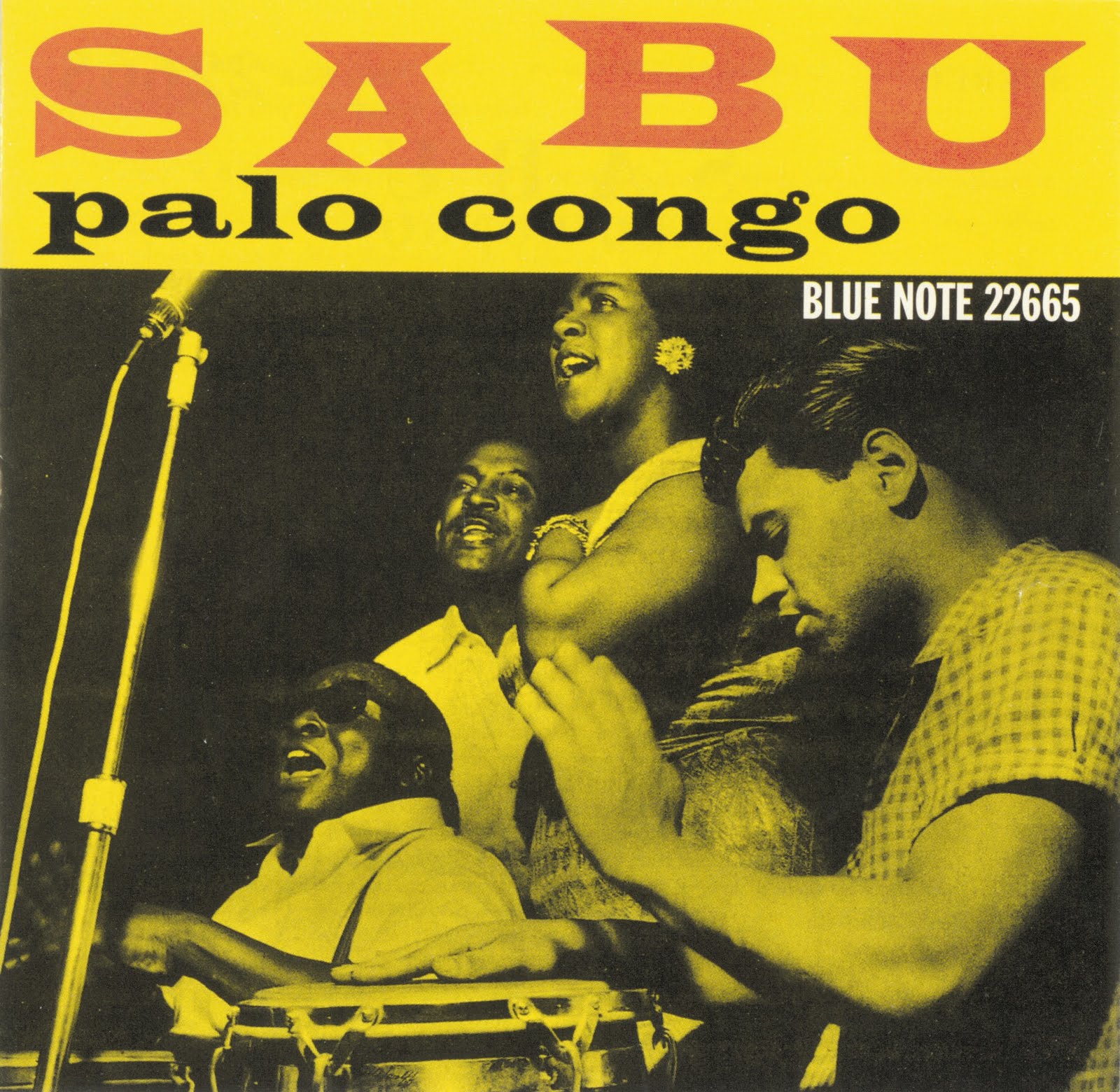
Sabu - Palo Congo (1957)

This music speaks to me. Unfortunately, it's speaking Spanish, so I don't understand a word.

I kid of course, but I also make a point. Those of you who've met me would most likely attest to the fact that I'm not what you'd call the dancing type. For myriad reasons, I simply do not dance. Consequently, I have never had much use for music that has as its primary function the instilling of a desire to dance in the listener. Sabu's Palo Congo falls into this category, a trait that I imagine will not be that uncommon as I go through The Book's 1001 picks.

It's not that I am oblivious to what it's trying to do to me. I do feel it. But as Sabu's ancient, tribal rhythms work their powerful mojo on the most primitive parts of my brain, I can't help but think of Peter Gabriel earnestly croaking out "The Rhythm of the Heat" (working title - I kid you not - "Jung in Africa") from his solo album Security: It goes a little something like this:
Looking out the window
I see the red dust clear
High up on the red rock
Stands a shadow with a spear...
Huff, huff, huff, huff...
The land here is strong
Strong beneath my feet
It feeds on the blood
It feeds on the meat
The rhythm is below me
The rhythm of the heat
The rhythm is around me
The rhythm has control
The rhythm is inside me...
THE RHYTHM HAS MY SOUL!!!"

Can you friggin' believe this guy?! And he says he quit Genesis because they were getting "too pretentious"? Don't "smash the watch", dude. Smash the fucking video camera so you can't embarrass yourself and your "real Africans from Africa" band by writhing around on the ground like Frankenstein's Monster on the verge of his first Tantric orgasm. Oops... Too late. Sorry!

Had I heard it before? I honestly couldn't tell you. After a while it all kind of blends into one, giant chicken-shredding voodoo jam.
Do I like it? Something inside me resists it.
Repeat Listenability? Very low. This stuff is like saffron. A little goes a long way.
Am I keeping it? No. However, I'm thinking this would pretty much be essential listening for anybody who writes, plays or records music for a living - or anybody who wants to do so. It's like a university level course in poly-rhythms.
Standout Tracks? "El Cumbanchero" is the only one that separates itself from the "boogada-boogada" blob in my mind, so I'll say that one.

Saturday, August 13, 2011

A MUSICAL EDUCATION IN 1001 STEPS - PT 10

Thelonious Monk - Brilliant Corners (1957)

Thelonious Monk is the second most recorded jazz composer in history after Duke Ellington. Duke wrote over 1000 songs. Monk wrote 70. The things you learn from Wikipedia!

I'm loving this album. Even though I inherited a love of jazz from my dad, who was a huge fan of early Miles Davis and everything by Dave Brubeck, I make no claims to jazz hound status. I can't tell where a piece of music was recorded based on the ambient room dynamics like some jazz fans can. I also am not one of those Jazz Fascists who insists that if a piece of music deviates one iota from the strict parameters they set - be it Dixieland, or Swing, or Bebop, or (heaven forbid) Fusion - then "it isn't REAL JAZZ!"

All I know is what I can tell with my own two ears, and this kind of music - where virtuosi take turns trying to impress each other with mind-blowing improvisations over a structured theme - is what I think of when I think of Jazz. Did I mention that I'm loving this album?

Had I heard it before? No, much to my shame.
Do I like it? Yes.
Repeat Listenability? High.
Am I keeping it? Yes.
Standout Tracks? All five tracks are great, but my favorites are the title track and the piano solo "I Surrender, Dear"